Platelet Rich Plasma PRP
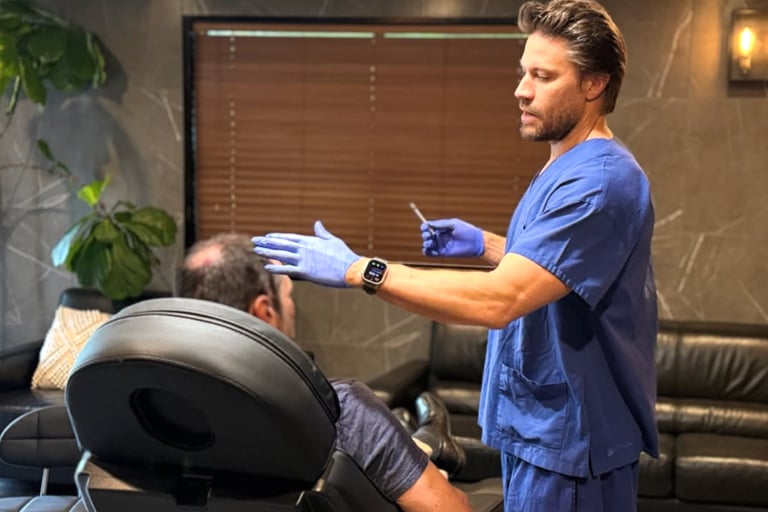
PRP therapy has emerged as an innovative solution for hair loss. Harnessing the body's natural healing processes, PRP involves extracting up to 60 ml amount of your blood via a venous cannula, processing it to concentrate the platelets, and re-injecting it into the scalp. You receive one injection per square cm for the treatment area needed, meaning some treatments will require up to 100 injections subcutaneously. For most effective results, we recommend repeating the treatment 3-6 monthly. Effects will decline 12 months after the final treatment, if the treatment is not continued.
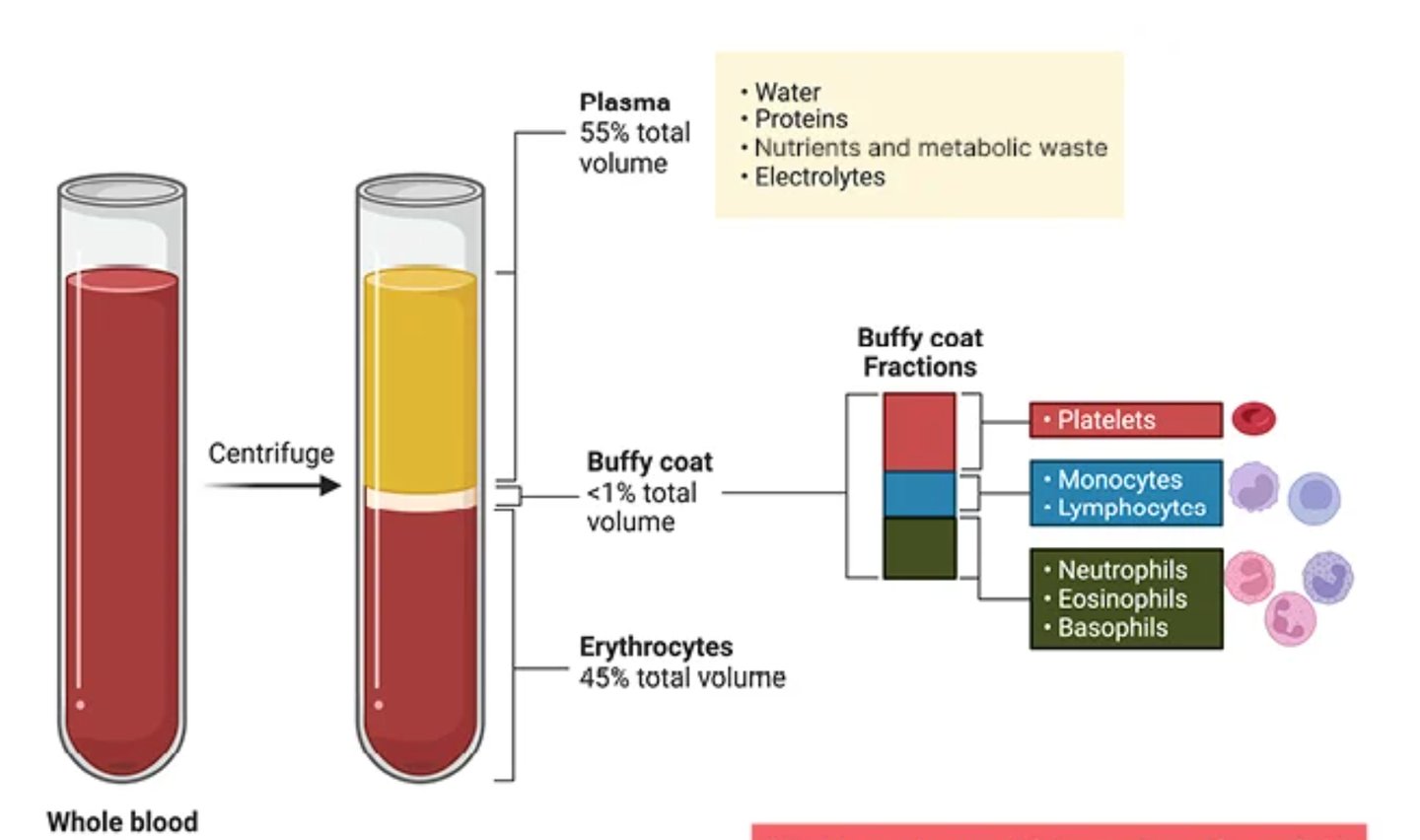
PRP stimulates hair follicles and promotes new hair growth. We use a centrifuge with known g-force, and crucial to the process, a double-spin method, which whilst taking more time, it increases the platelet count around 300% over that of some of our competitors who use more time conscious methods.
We cannot treat patients who are on long-term NSAIDs, anti-inflammatory medications, or things such as Clopidogrel. Additionally, you should refrain from taking anti-inflammatory medication for 4 weeks post treatment. Please ask our advice on this matter when booking your appointment.
The procedure takes around 45 minutes.
PRP's Mechanism of Action
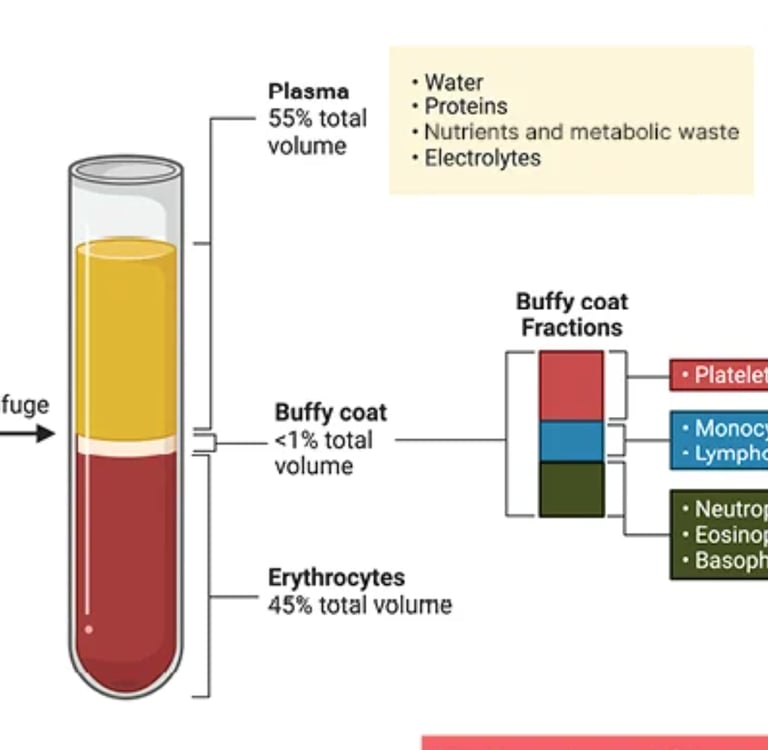
Our centrifuge technique results in a more concentrated type of PRP rich in Leukocytes (LR), which are the white blood cell components of the blood containing granulocytes (neutrophils, eosinophils, and basophils), monocytes, and lymphocytes (T cells and B cells). These are the pro-inflammatory cells that aid in hair loss treatment.
Specifically, LR-PRP produces a range of growth factors which aid in hair growth as follows:
PDGF - Platelet derived endothelial growth factor, which stimulate dormant or weakened hair follicles, encouraging them to enter the anagen phase (growth phase) of the hair cycle.
VEGF - vascular endothelial growth factor, play a major role as a potent hair growth stimulator via an angiogenesis induction
IGF-1 - Insulin like growth factor, stimulates proliferation of cycling Ki67+ basal keratinocytes, induce and prolong the anagen phase of the hair growth cycle
GDNF - Glial cell line–derived neurotrophic factor can stimulate cell proliferation and protect hair follicle from premature catagen transition
BCL-2 is localized to the outer membrane of mitochondria, where it plays an important role in promoting cellular survival and inhibiting the actions of pro-apoptotic proteins.
In addition, LR-PRP can induce the proliferation of dermal papilla (DP) cells by activating extracellular signal-related kinase (ERK), fibroblast growth factor 7 (FGF-7), beta-catenin, and Akt signaling, an anti-apoptotic signaling molecule. Further PRP contains Bcl-2 protein (B-cell lymphoma 2), an anti-apoptotic protein, which increases the survival of hair follicle cells through anti-apoptotic effects and stimulate hair growth by extending the anagen phase of the hair cycle.
All these factors play a major role in stimulating hair growth through cell proliferation, differentiation and angiogenesis.
The Evidence
A Meta-analysis concluded 'Thirty studies, including 687 patients, met our inclusion criteria. Twenty-nine studies reported beneficial results, and 24 studies reached statistical significance on a measured outcome. Ten RCTs were included. Our meta-analyses show that PRP treatment increases hair density and hair thickness.' [A Evans, et al. 'Platelet-rich plasma as a therapy for androgenic alopecia: a systematic review and meta-analysis'. Journal of Dermatology. 2022]
A randomised, placebo-controlled trial led by Gentile et al. evaluated the efficacy of platelet-rich plasma (PRP) injections for treating androgenic alopecia in men. The study involved 23 male patients who received three PRP treatment cycles. Results showed a significant increase in hair count and density, with an average rise of 33.6 hairs in the target area and 45.9 hairs per cm² compared to baseline. Microscopic analysis revealed increased epidermal thickness, a higher number of hair follicles, and elevated levels of Ki67+ keratinocytes and follicular bulge cells post-treatment. No major side effects were reported. These findings suggest that PRP injections are a safe and effective treatment for male pattern hair loss. [P Gentile et al, 'The Effect of Platelet-Rich Plasma in Hair Regrowth: A Randomised Placebo-Controlled Trial', Stem Cells Translation Medicine, 2015.]
A study by Manickam et al. assessed the effectiveness of platelet-rich plasma (PRP) therapy in treating androgenetic alopecia (AGA) in males. The study involved 30 participants, 27 of whom completed four PRP treatment sessions. Results indicated that 48.1% of patients experienced mild improvement, 40.7% showed moderate improvement, and 11.1% had significant improvement in hair regrowth. The study concluded that PRP treatment alone is a simple, cost-effective therapy for AGA, yielding favourable results without major adverse effects. [N Manickam et al, 'Efficacy of Platelet-Rich Plasma in Males With Androgenetic Alopecia', Cureus, 2023.
PRP can be used as a new therapeutic option for hair loss including androgenetic alopecia and female pattern hair loss, either as a monotherapy or an adjuvant to conventional therapy or hair transplantation. [Paichitrojjana, 'Platelet Rich Plasma and Its Use in Hair Regrowth: A Review. ' PubMed 2022]
This study reported on a total of 541 patients receiving locally acting Dutasteride treatment by way of mesotherapy. The commonest approach during the first year was to perform the treatment every 3 months. Response to the mesotherapy could be assessed in 86 patients (15.9%) after one year. Most of them presented clinical improvement, being a marked improvement in 33 patients (38.4%). Pain was the most frequent side effect of the treatment (246 patients, 45.5%). No serious or sexual adverse events were detected. [Saceda-Corralo, D, et al. 'Mesotherapy With Dutasteride for Androgenetic Alopecia: A Retrospective Study in Real Clinical Practice' Journal of Drugs Dermatology, 2022]
In their comprehensive review, J Stevens and S. Khetarpal evaluate the efficacy of PRP in treating androgenetic alopecia (AGA). The authors highlight that PRP has emerged as a “promising treatment modality for AGA,” noting that various studies report positive outcomes, including increased hair density and improved hair diameter. [J Stevens. 'Platelet-Rich Plasma for Androgenetic Alopecia: A Review of the Literature and Proposed Treatment Protocol'. International Journal of Women's Dermatology. 2018]